Rising nearly 74 metres above the steel-blue waters of Lago Argentino, Perito Moreno Glacier is one of the few glaciers on Earth that continues to advance rather than retreat. Its thunderous calving events and millennia-old ice have drawn scientists, explorers, and travellers to the remote wilds of Argentine Patagonia for over a century.
Perito Moreno Glacier traces its origins to the Southern Patagonian Ice Field, the third-largest continental ice mass on the planet, which began forming approximately 18,000 years ago during the last great Ice Age. Fed by snow accumulation in the Andes Mountains along the Chile-Argentina border, the ice field slowly gave birth to dozens of outlet glaciers. Perito Moreno emerged as one of its most dynamic offshoots, carving a path through the Patagonian landscape over thousands of years. Its formation is a direct result of orographic precipitation, where moist Pacific air masses rise over the Andes, cool rapidly, and deposit enormous quantities of snow that compress over centuries into dense, ancient glacial ice.
As global temperatures fluctuated through the Holocene epoch, Perito Moreno experienced cycles of advance and retreat that shaped the surrounding geography dramatically. The glacier flows from the Southern Patagonian Ice Field at elevations exceeding 1,500 metres, descending roughly 30 kilometres before terminating at the shores of Lago Argentino's Brazo Rico arm. Indigenous Tehuelche and Aónikenk peoples inhabited the Patagonian steppe surrounding these ice fields for thousands of years, though the glacier's remote and formidable terrain meant it played more of a spiritual and environmental boundary role than a settlement zone. The landscape they knew was defined by constant geological transformation driven by the glacier's slow but relentless movement.
The glacier bears the name of Francisco Pascasio Moreno, an Argentine explorer, scientist, and national hero born in Buenos Aires in 1852. Known widely as Perito Moreno — 'perito' meaning expert or specialist — he dedicated much of his life to exploring and documenting the Patagonian wilderness. In 1879, Moreno became the first person of European descent to reach and describe Lago Argentino, the enormous glacial lake into which the glacier calves. His detailed geographic and scientific surveys were instrumental in resolving a long-standing boundary dispute between Argentina and Chile in 1902, a contribution so significant that he was offered vast tracts of Patagonian land as a reward, much of which he donated to the Argentine state to become protected parkland.
The glacier itself was formally documented and named in Moreno's honour posthumously, cementing his legacy in one of the world's most spectacular natural landmarks. European scientific expeditions throughout the late 19th and early 20th centuries began mapping the Southern Patagonian Ice Field with increasing precision, revealing the true scale of Perito Moreno's mass and movement. Glaciologists noted something extraordinary early on: unlike the vast majority of the world's glaciers, which were retreating in response to post-Ice Age warming, Perito Moreno appeared to be in a state of dynamic equilibrium — sometimes advancing, sometimes slightly retreating, but never disappearing. This anomaly made it a subject of intense scientific interest that continues to this day.
One of the glacier's most dramatic and scientifically fascinating phenomena is its periodic rupture cycle. As Perito Moreno advances across Lago Argentino, it occasionally seals off the Brazo Rico and Brazo Sur channels from the main body of the lake, forming a natural ice dam. Water pressure builds on the dammed side over months or even years until the ice bridge collapses in a spectacular rupture — a thunderous event involving massive ice towers crashing into the lake and sending metre-high waves across the water. These ruptures have been recorded since the early 20th century, with notable events occurring in 1917, 1934, 1936, 1940, 1942, 1947, 1952, 1956, 1960, 1963, 1966, 1970, 1972, 1975, 1977, 1980, 1984, 1988, 2004, 2006, 2008, 2012, and 2016, among others.
Los Glaciares National Park, within which Perito Moreno sits, was established by Argentina in 1937 under the presidency of Roberto Ortiz, making it one of the country's earliest protected wilderness areas. The park encompasses approximately 726,927 hectares of Patagonian landscape, including glaciers, mountains, forests, and lakes. In 1981, UNESCO designated Los Glaciares a World Heritage Site, recognising its outstanding universal value as a natural laboratory of glaciological and geomorphological processes. The park contains 47 major glaciers fed by the Southern Patagonian Ice Field, but it is Perito Moreno that draws the overwhelming majority of the estimated 500,000 visitors who travel to the region each year, cementing the glacier's role as Argentina's most visited natural attraction.
Tourism to Perito Moreno began in earnest in the mid-20th century, initially accessible only via arduous overland journeys from the nearest town of Calafate, now known as El Calafate, founded in 1927 on the shores of Lago Argentino. The construction of improved road infrastructure in the latter decades of the 20th century, combined with the development of El Calafate's international airport — inaugurated in its modern form in 2000 — transformed access to the glacier entirely. What once required weeks of expedition-level travel became achievable in a single day from Buenos Aires. Purpose-built viewing platforms, walkways, and a visitor centre gradually elevated the experience from rugged adventure to accessible natural wonder without diminishing the glacier's raw, overwhelming power.
By the 1990s and 2000s, Perito Moreno had achieved global icon status, regularly appearing in travel publications, wildlife documentaries, and lists of the world's must-see natural wonders. The Argentine government, in partnership with the National Parks Administration, invested significantly in sustainable tourism infrastructure, carefully balancing visitor access with conservation imperatives. Ice trekking directly on the glacier's surface became a hugely popular offering from the 1990s onward, with guided Big Ice expeditions allowing visitors to walk among the glacier's towering seracs and electric-blue crevasses wearing crampons. The combination of accessibility, visual drama, and active geological processes made Perito Moreno uniquely compelling in a world where many glaciers are silently shrinking from view.
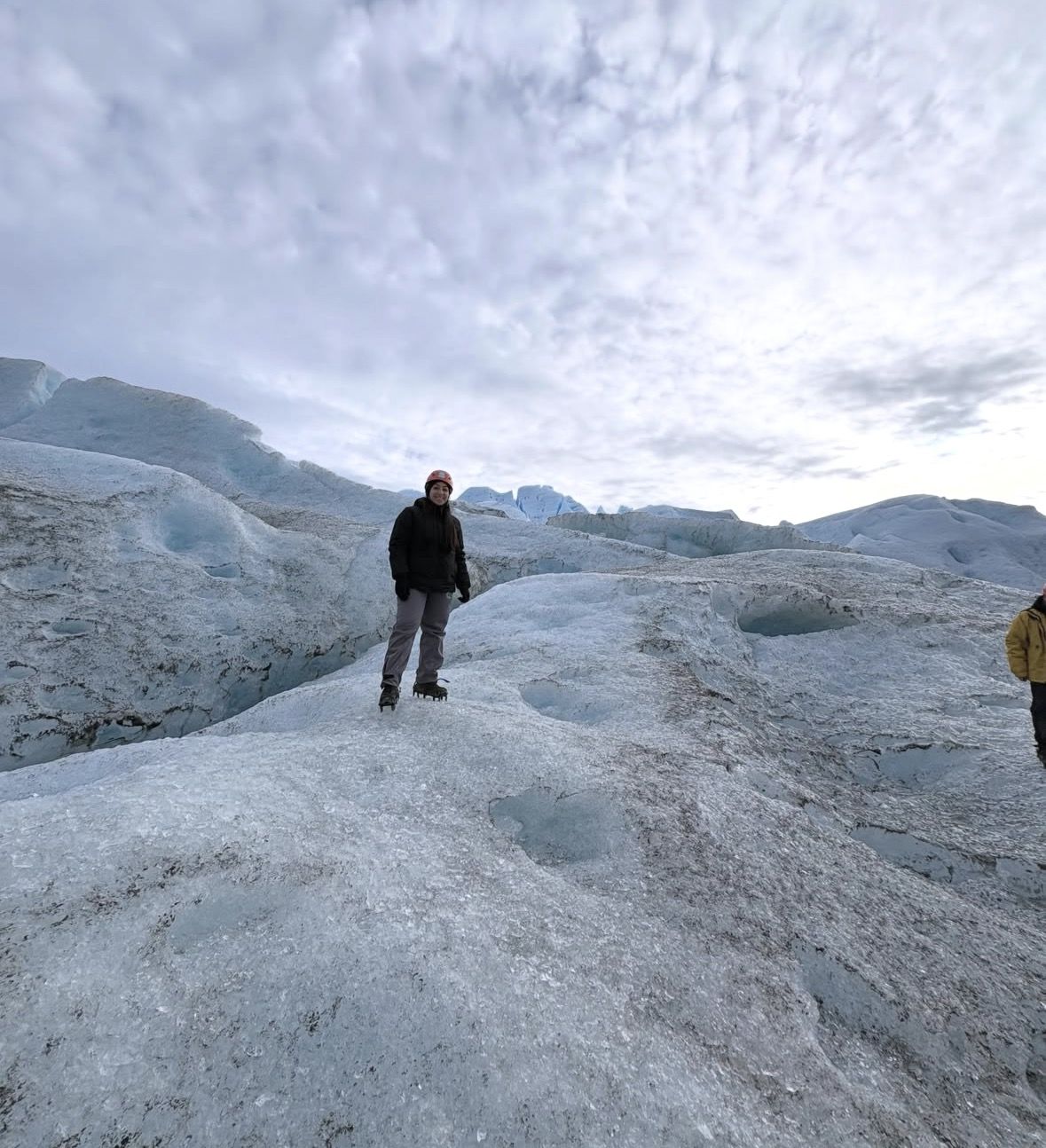

Today, Perito Moreno remains one of the only glaciers in the world that is considered stable, maintaining a rough equilibrium between its rate of advance from the ice field and the volume lost through calving into Lago Argentino. Scientists from Argentina's CONICET research institute and international glaciological bodies continue to monitor the glacier closely, using GPS technology, satellite imagery, and on-site measurements to track its behaviour against the backdrop of accelerating global climate change. The glacier calves continuously, and the thunderous crack of ice breaking free from its face — followed by the slow-motion collapse of ice towers the size of buildings into the turquoise water below — remains one of nature's most visceral and unforgettable spectacles.
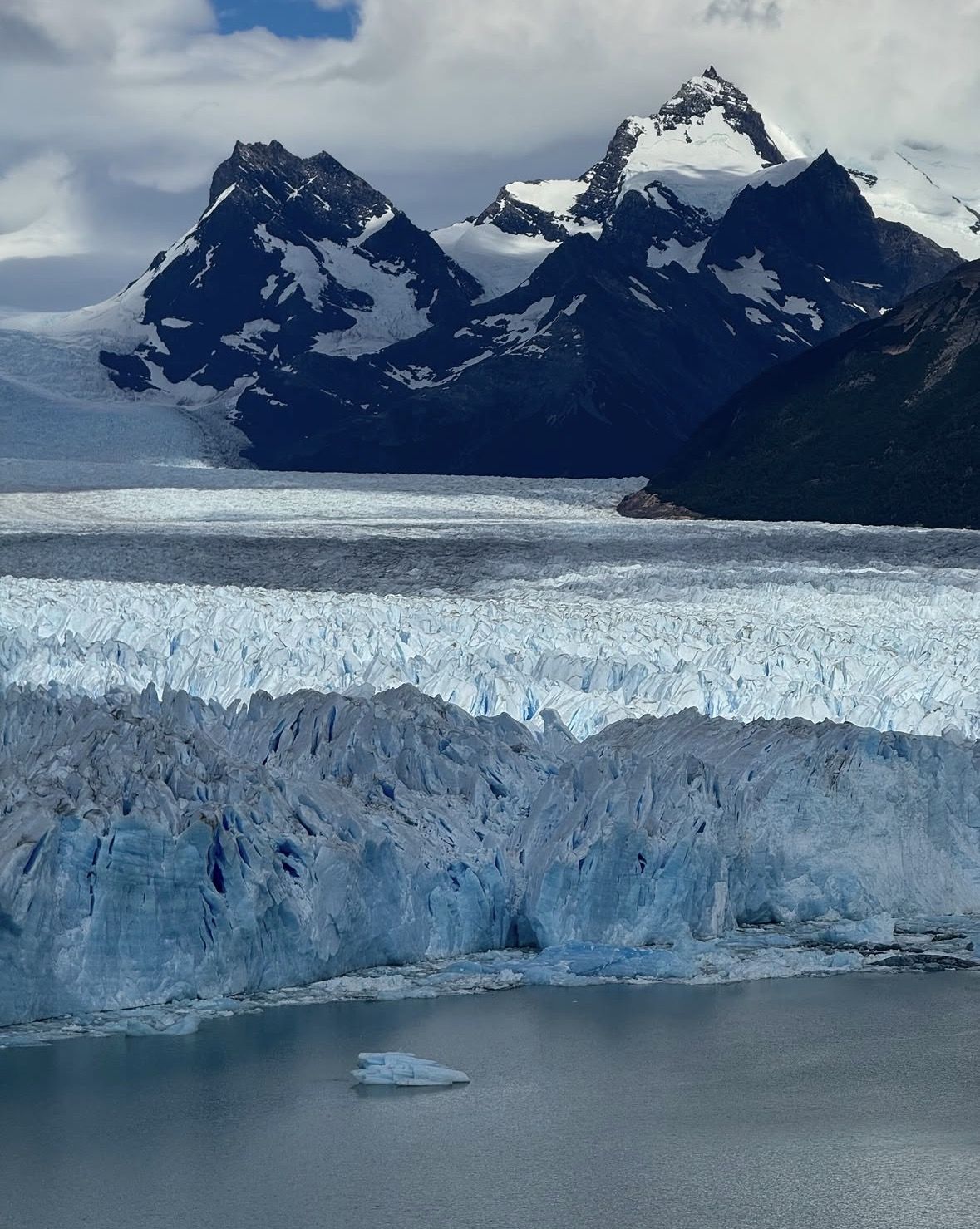
Visitors arriving at Perito Moreno today can explore an extensive network of elevated steel walkways and viewing platforms that wind through native lenga beech forest toward the glacier's 5-kilometre-wide face. From here, the scale is almost incomprehensible — the glacier's ridgelines and towers shimmer with shades of white, grey, and the deepest cobalt blue, a colouration produced by the compression of air from millennia of accumulated snow. Whether you choose to observe from the platforms, kayak through floating icebergs along the glacier's edge, or lace up crampons for a guided trek across the ice itself, Perito Moreno delivers an encounter with geological time that few places on Earth can rival. This is a destination not merely to visit, but to feel — and it will stay with you long after you leave Patagonia behind.
Ready to Experience It Yourself?
Standing before the thundering, electric-blue face of Perito Moreno Glacier is a once-in-a-lifetime experience that no photograph can truly prepare you for. Our hand-picked tour partners offer everything from classic viewing platform excursions to full-day ice trekking expeditions, departing daily from El Calafate. Browse our top-rated Perito Moreno tours below and secure your place on one of Patagonia's greatest adventures.
Book Your Tour Now